Weaving with Indigo Dyeing
Emi has created a series of woven works that explore the beauty and depth of indigo. Using a variety of natural materials, she experiments with different types of indigo dyes, each carrying its own history and character. Her practice includes: Japanese sukumo indigo: a traditional fermentation dye, Home-grown indigo plants: cultivated and processed locally, bringing a personal and sustainable touch. Ryukyu indigo from Okinawa Island: cultural heritage and Organic indigo pigments.
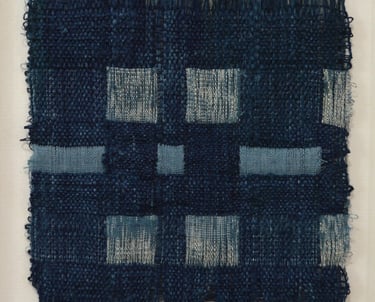
Indigo double weaving
Emi has created this special piece of double weaving for the AIZOME, The Craft of Japanese Indigo-dyeing exhibition at the Japanese embassy in London in 2023.
She has used two different types of silk yarns hand dyed with three different types of indigo dyes. A kibiso silk dyes with Japanese sukumo indigo, Akadama silk dyed with organic indigo dyes using ikat technique, and dyed with indigo leaves from her garden.
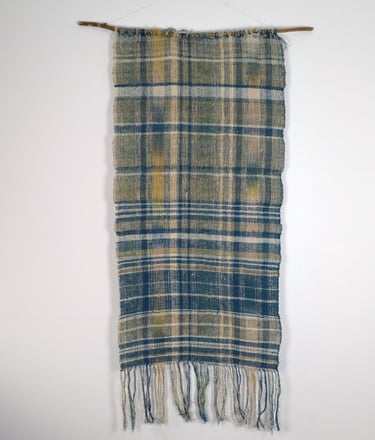
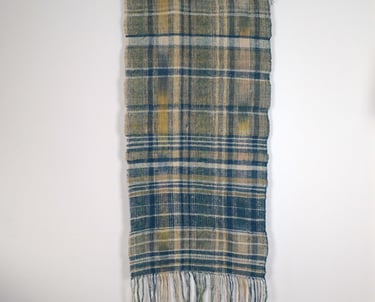
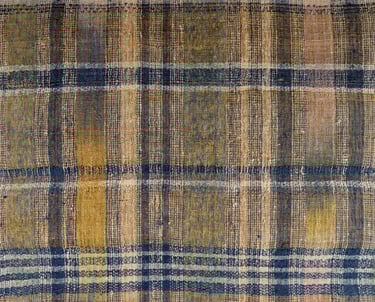
Indigo TAFU weaving
with kuzu and linen
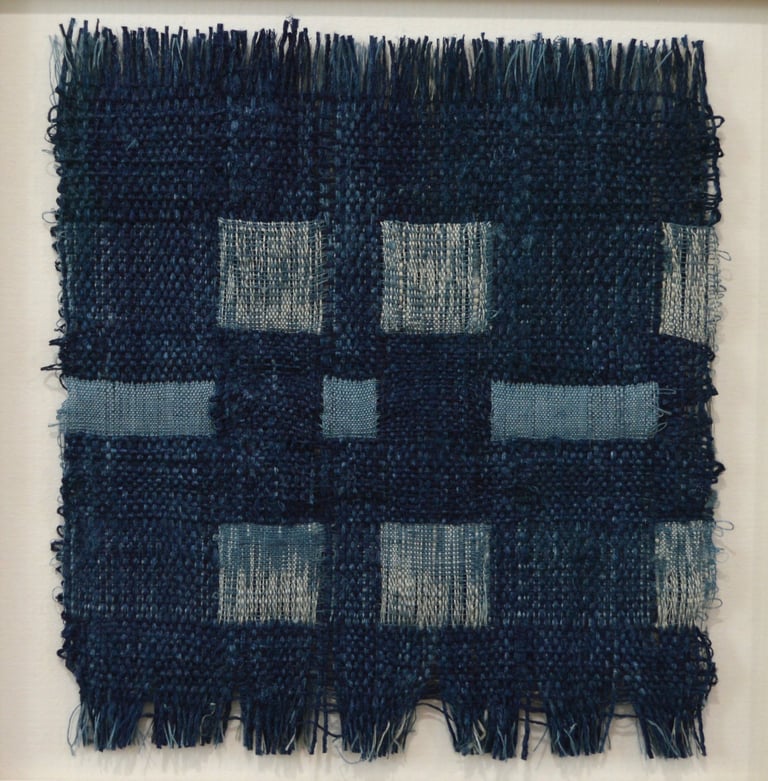
One of the oldest handwoven fabrics in Japan is called “TAFU”, which is traditionally woven using Kouzo (paper mulberry), Fuji (wisteria vine), Kuzu (Japanese arrowroot), Cyoma (ramie), amongst others. These yarns are made by using fibers from the stem, under the hard external bark. The extraction requires a lot of processing and for this reason, TAFU almost disappeared in Japan. Emi has been always interested in traditional techniques and she often wonders how the very first yarns were made. This piece is woven using Kuzu yarn from Japanese farmer and hand spun linen from Slovenia.
This work was a part of exhibition, "Roots" at the Free hand weaver studio in London in 2021.
Indigo square weaving
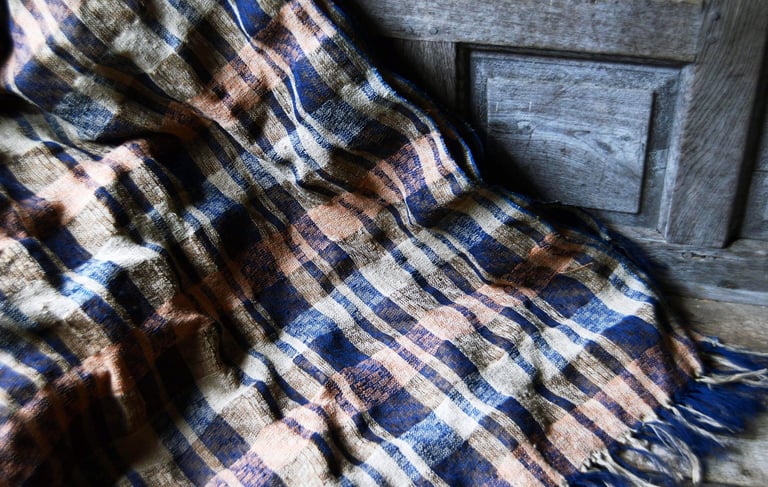
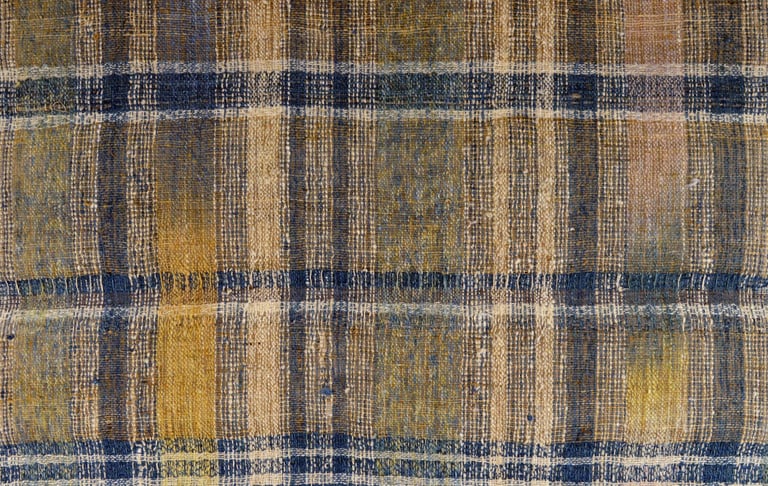
Emi created a large silk blanket, hand-dyed with organic indigo, local willow leaves, and walnut. Commissioned by a fashion label in England and China, the piece reflects her skill in natural dyeing.
She prepared silk yarn samples before weaving the blanket, which reveals fine, intricate details throughout.